
The objective of this challenge is to implement a system that enables the timely prediction and identification of leaks in the pipelines of the CMPC pulp mill in Guaíba, Brazil.
The timely identification and prediction of leaks will significantly reduce unscheduled plant shutdowns. By transitioning toward predictive maintenance management, operational continuity is guaranteed, personnel safety is safeguarded, and the environment is protected, minimizing risks to staff and the community while optimizing asset efficiency.
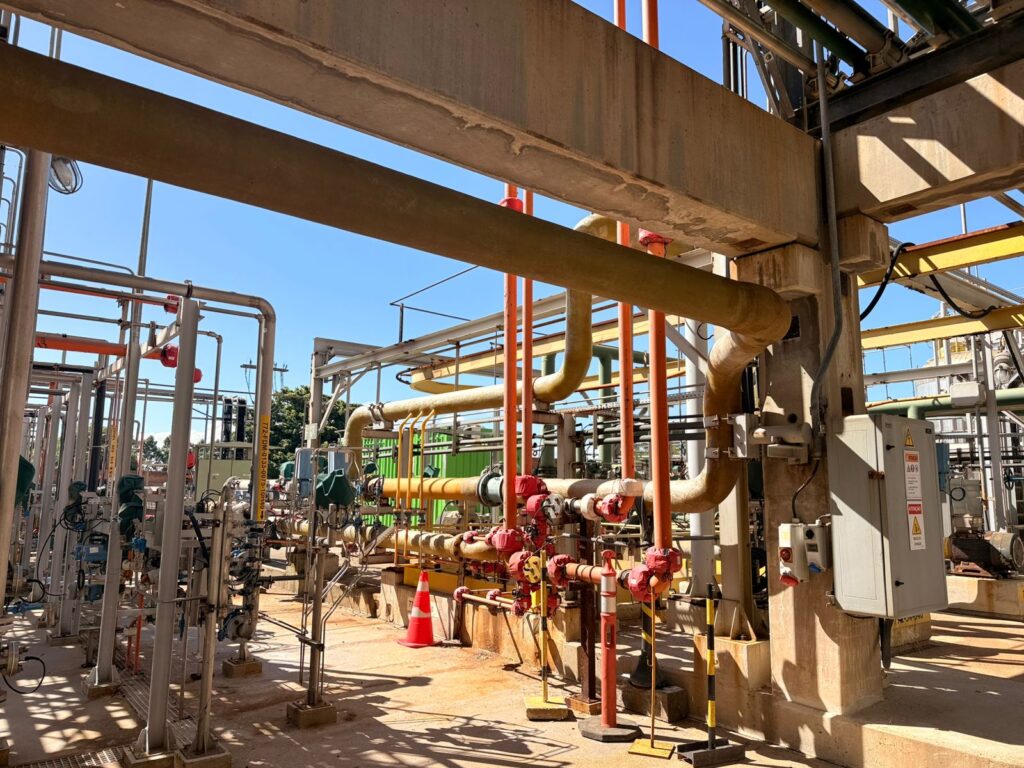
At the Guaíba plant, the pipelines are made of fiberglass and carbon steel and transport critical fluids such as methanol and chlorine dioxide. Given the extent of the infrastructure, the solution must offer monitoring and leak detection capabilities across wide areas and precise localization of the leak point.
How will we evaluate your solution?
The solution will be evaluated based on the following requirements:
- Preventive and diagnostic capability: The ability to prevent non-point leaks and accurately determine their exact location when they occur.
- Non-invasive implementation: Installation and operation must be carried out without stopping operations or interrupting production levels.
- Versatility: The technology must be compatible with different pipeline materials and various types of transported fluids.
Additionally, solutions that already have industrial validation for similar leak detection use cases, are low-cost, and can identify leaks in the most complex situations—such as inside boilers, without visibility, and at 900°C—will be valued as ideal requirements.
We are expecting to find
Examples of potential solutions include:
Take your first step with VENTURE CLIENT
RECOMMENDATIONS FOR APPLYING